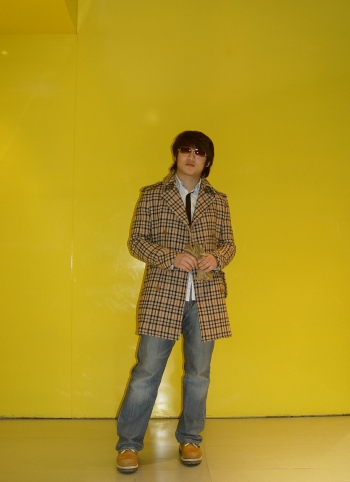
Plaid Military Coat

yellow

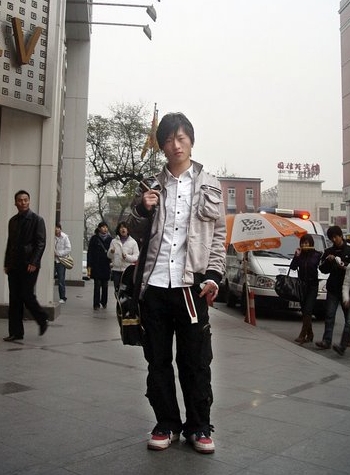
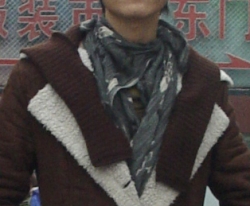
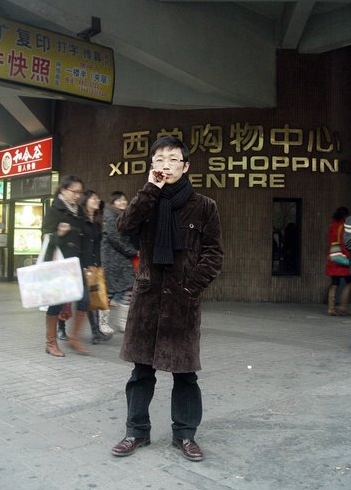
He must have been expecting to be flash photographed. I often wish I could comment on the attitude, voice, or vibe of a certain person I photograph. Stylites is not a platform for my thoughts and criticisms though. With so much Burberry print covering China – in collars, fake scarves, ties, and window curtains – this ranks as a use of the plaid that I like. The young entrepreneur’s plaid stands out from the crowd of epuelatted coats that define this winter.

Fashion guidance for Asian men

The January Trouser Press, featured in That’s Beijing, has my suggestions for Asian men on how to dress. Two key pieces are:

– colors that provide high contrast with skin, keeping away from most yellows, beiges, or cream, and most browns

– avoiding bulky clothing and most off-the-rack items intended for export to Western markets

Herringbone Trench Coat

Daniel Sui is a designer for Kappa in China and he appeared on Stylites before. The IHT had an interesting story on the public offering of Dongxiang, which owns the exclusive license for the Kappa brand in China. As the existence of Daniel’s job proves, this Italian sportswear brand is not only produced and sold in China, but also designed here. The article speaks of over 20% annual growth of the Chinese sportswear market.

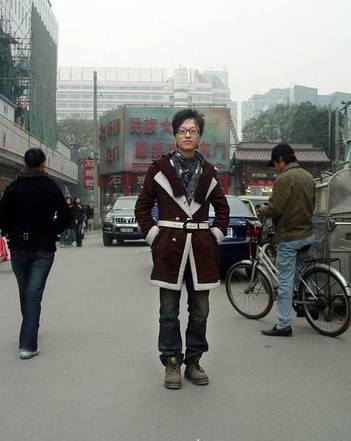
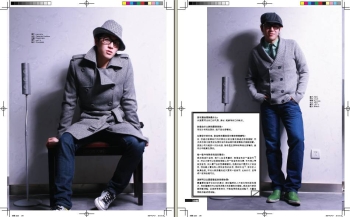
The funny thing is that I have the exact same herringbone trench coat and I was wearing it that same day. Daniel also wore it for his photo shoot with 1626 (1626 also did a shoot and interview with me that should be appearing over the next couple of weeks):

daniel

The coat is intended for export to Japan and is by some obscure brand. The cut is really slim and the styling is quite nice. I think the coat looks good and that’s why I bought it despite some misgivings. The price of around USD 50 also didn’t dissuade me. Unfortunately, truths like “you always get what you pay for” do seem eternal. This coat has the same key defect as many stylish pieces made in China for export to Japan as well as stylish fakes of brands like Dior Homme and Burberry Prorsum. That defect is poor quality materials. The fabric, buttons, thread, and lining are all sub-par. Even H&M and Zara offer substantially better quality. The fabric began to pill after a few wearings and the buttons are about to fall off en masse. Anyway, all I can say is that it is worth using Senli and Frye to get a durable piece that will last through the years. That said, sometimes one does want throw-away fashion – this certainly doesn’t seem very ecologically friendly though.

Nike Shoe Celebrates Team China ’84; Company seeks Cheaper Production

Few US brands are more associated with China in the minds of Americans than Nike. Thinking of sweat shop labor and prison labor in China, Nike immediately comes to mind. Even if Nike really is the worst violator, someone has done a bad job on PR if the perception I have is widely held. Of course the lost fingers, poor ventilation, and 16 hour work days are the fault of the contractors and not Nike itself and, to give credit where it is due, the efforts of Nike’s Corporate Social Responsibility (CSR) officers toward creating better working conditions have won much praise for the company.

Regardless of any negative associations, Nike nearly always sees rising profits, of which China is now a major source. Nike is one of the most well-recognized foreign brands in China. Over the seven months leading up to the Olympics, Nike will be releasing new products that cement the stature of the brand here. One of the first examples is the new Air Max 90 that celebrates Team China’s success in the 1984 Olympics in Los Angeles where it won 15 Gold medals. See the pics here.

Interestingly, even as Nike’s business improves in this market, much of its production is shifting out of China due to rising labor costs. The Chinese company that is one of Nike’s biggest suppliers, Yue Yuen Industrial, has shifted much of its production to Vietnam and Indonesia to cut costs. The new Chinese labor law, approved at the end of 2007, is expected to push even more producers out of the country.
Xidan- Pink Japanophile

pink-japanophile

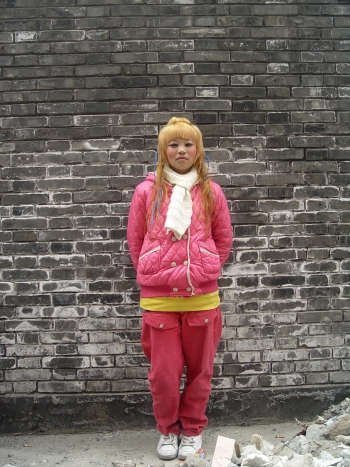
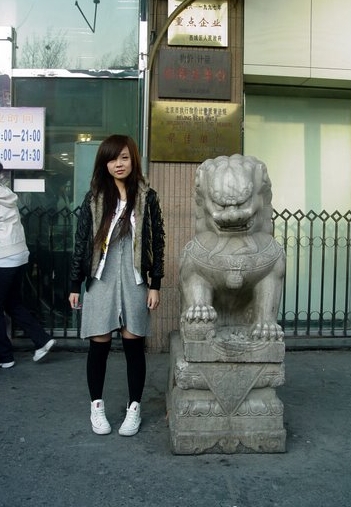
Pink in a decidedly Japanese way, Fang Yuan also does hair at Xidan. She didn’t have a chance to speak before I was swarmed with male stylists criticizing my haircut.

Xidan strives to be Shibuya, the amazing epicenter of Japanese street style, but often achieves a rugged flavor of its own, more suited to Beijing. Before their encasement in drab Western business attire – China’s selection in formal clothing is quite boring and generally of low quality – Beijing young people get the chance to experiment with quirky looks from Japan and Korea. This rare style reservoir, where nearly every pedestrian makes some kind of effort to stand out, presents the challenge of sifting through overwhelming crowds and persuading those with the most tasteful or unique outfits to pose. In Xidan, it’s easy to feel overwhelmed by the number of people. It is not really like this in the rest of Beijing, which is spread-out and does not feel as crowded as Manhattan or Hong Kong.

Unlike in more Eastern parts of the city, shoppers at Xidan often have no concept of what Stylites in Beijing could possibly be and I was accused more than once of being a wretch up to some foul tricks.

UNCTAD: China the World’s Top Producer of Creative Goods

A new UNCTAD report calls China the worlds largest exporter of “creative goods” with a total figure of USD 89.1 billion in 2005, including Hong Kong’s USD 27.7 billion. Italy was number two with USD 28 billion in 2005. This includes goods such as films, music, traditional crafts, design and architecture, but still is a rather surprising finding. Considering that China bemoans its deficit in cultural products and lack of creativity, this is not what I would expect. Also, China’s government constantly stresses development of innovation to address this deficit. I would have to research further into what categories they are using to come up with these figures. Doesn’t Hollywood export even more than USD 28 billion in one year? Perhaps it doesn’t count as creative. It’s frustrating to see a statistic that doesn’t make sense, but not have time to research why it came into being.

No one doubts the potential in China though. There may not be many well-known Chinese designer brands, but with this country’s love of fashion and the number of young people studying it, the country seems on track to become a source of creativity within the next few years. Reflecting the critical role of China in global fashion, France’s Fashion TV kicks off its global talent search for this Olympic year in China seeking to unlock all of the design genius that might not otherwise find a platform in this competitive industry.

Ted Baker in Beijing?

Ted Baker is setting up its first shop in China, according to the FT, though the article does not say where. I suspect it will be in Shanghai and not Beijing. Ted Baker style is decidedly British, a bit lower end than Paul Smith, but quirky in a similar way. The Ted Baker man probably works in advertising, graphic design, journalism or possibly a trendier financial institution, perhaps venture capital. Are there enough Chinese men in these occupations with the funds needed to buy Ted Baker? The reason I ask this question is that I can’t imagine a guy in a more conventional multinational wearing Ted Baker or Paul Smith, not to mention a state-run company. Ted Baker men are creative and stylish, but have enough money to buy nice clothes. Then again, maybe I’m wrong. Maybe there are more Ted Baker men in Shanghai than in Beijing. I still haven’t figured out why the Paul Smith boutique in Beijing closed.

Interestingly, I haven’t seen many Ted Baker fakes yet – nothing like the amount of Paul Smith stuff. Ted Baker does produce a lot in China though, so, as the brand gains in recognition, we can expect to see more fakes as well as “factory seconds”.

Eco-Fashion

The China Daily interviewed me regarding Stylites and Senli and Frye tailoring this past Sunday. The full profile with photos should be appearing in the coming weekend’s China Daily. Even before that, yesterday, some of my comments on eco-fashion made it into an article in a piece on the subject in the China Daily. I mentioned Chinese versions of the “I’m not a plastic bag” cloth bags that are popular here, either as fakes of the Anya Hindmarch item or as locally designed versions. Soon free plastic bags will be illegal at all stores in China, just as they are in much of Europe, so expect more coverage of the plastic bag issue and its relationship to eco-fashion on Stylites.

In other press related news, the CScout interview with me on trends and drivers in the China fashion market appears to be getting many links and to be quoted on countless other websites.

Darling Actress

dsc02193-tc

Yet another theater student, Ms. Wang studies at a Language University in Tongzhou. The nearby male hair stylists, hawking their business, applauded me for photographing her, describing her as a “true beauty”. When I asked questions regarding her views of fashion she smiled shyly and her friends told me to make something up that sounded nice. I’m trying to think of that should be.

Yet Another Camel Hair Coat

dsc02178

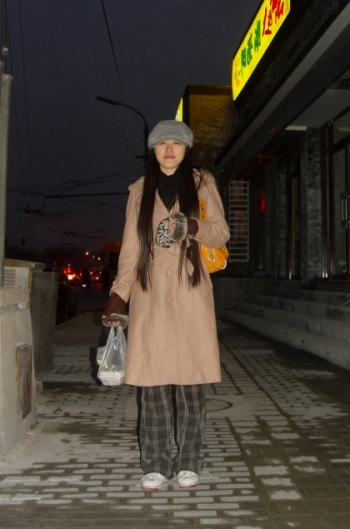
On Pingan Dajie, another long camel hair coat. Since the winter got to this particularly bone-chilling temperature, it has been much harder to find people to photograph. Black puffer coats that conceal all shape and color are the preferred garment during January. The cold also makes me feel guilty about stopping people rushing between buildings.