Yet Another Camel Hair Coat

dsc02178

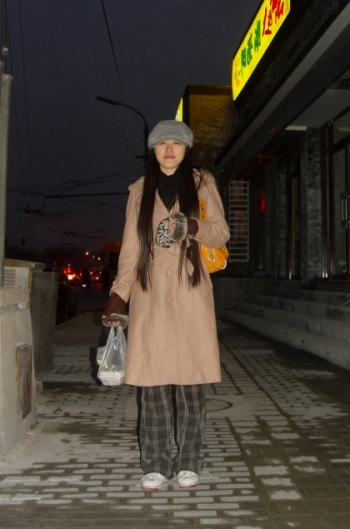
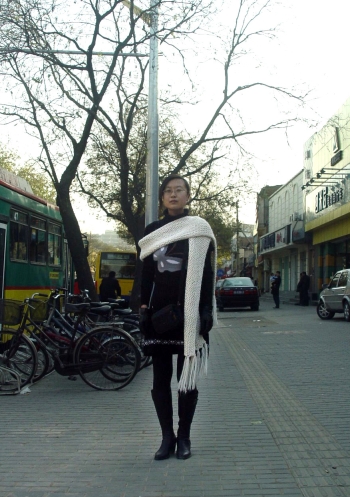
On Pingan Dajie, another long camel hair coat. Since the winter got to this particularly bone-chilling temperature, it has been much harder to find people to photograph. Black puffer coats that conceal all shape and color are the preferred garment during January. The cold also makes me feel guilty about stopping people rushing between buildings.

Camel Overcoat at Xidan

dsc02149-tc

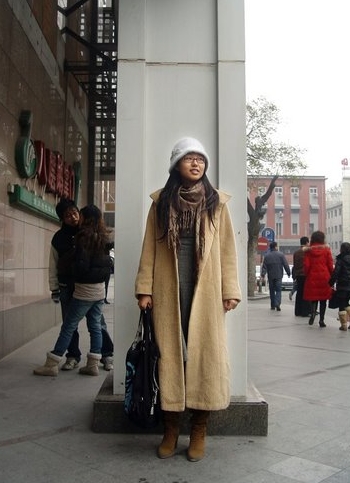
With all the synthetics, loud colors, plaids and garish youngsters at Xidan, it was refreshing to find Tian Yue, who says that natural fabrics and the idea of authenticity are essential to her style. She only buys cotton, wool, and linen.

This color of overcoat is not common in Beijing, but I have spotted several people wearing them. Many young Chinese feel that any color remotely resembling yellow (beige, brown, even green) does not look good with Asian skin tones. However, some of my friends in the industry have told me that colors from nature will in fact become more popular in China over the coming year. This is something to watch.

Camel Military Coat

dsc02267

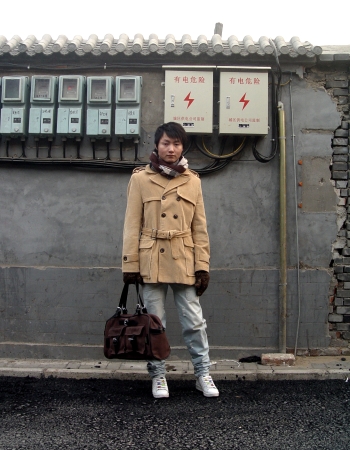
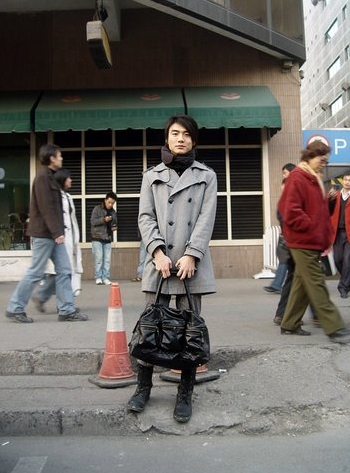
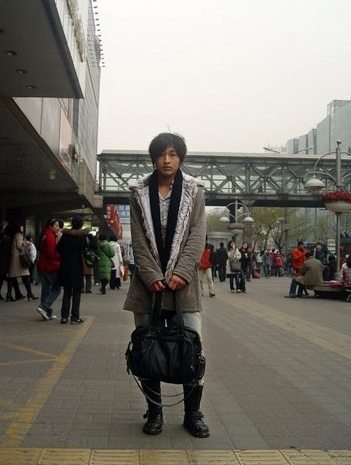
Here is a sophisticated urbanite walking through the old hutongs of Beijing. Sai Sai studies music and focuses on playing piano. I’m a great fan of the coat, though maybe not the jeans. It must be clear by now that military style is alive and well in China. I’ve heard some complaints in the West about it having lasted a bit too long. He was walking down Nanluoguxiang with a friend from Xiamen who was also taking pictures of stylish locals and snapped me, though I was looking rather mangled that day.

Playful Fuzziness

dsc02228-tc

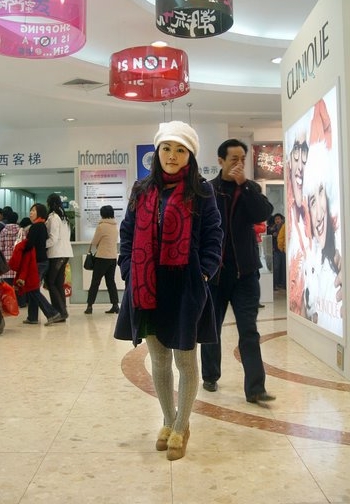
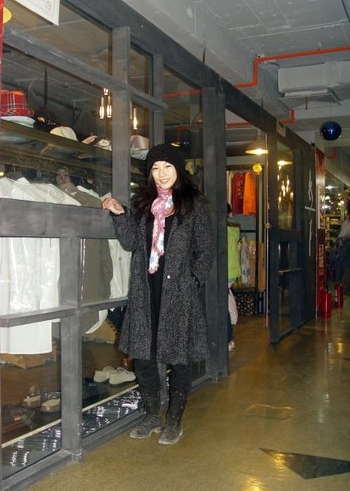
Textures and colors mingled in this light-hearted but lady-like early winter ensemble. Samantha describes her taste as “simple” though she has a great fondness for color. Shoes with a bit of fuzz are quite popular in China, as they appeal to both the desire of girls to seem cute and their interest in having warm feet.

Skirts in winter are a new phenomenon. A young woman couldn’t really consider wearing a skirt in winter when she was riding a bike to a minimally heated office. Still, traditional Chinese medicine holds that legs and feet are the most important body to keep warm. China is a great market for wool stockings and knee-length boots.

For Beijing, Gucci goes for the 8 in Red

The perfect way of getting around in August 2008 is made by Gucci and could be yours for a mere USD 3,420, which could be over USD 4,000 by the time of the Olympics at the rate the dollar is dropping. The color and fact that the brand is Gucci make this a perfect ironic symbol of the new China and I’m sure this exact thing has already been produced here as art. With eight products in total, there will also be a red watch, red shoes, a red Majiang set, a red bag set, and a hideous black and white panda. These products will only be available in Chinese Guccis. Olympics special edition products are a good idea and the bike will add a peppy feel to the boutiques, with their vapidly pretentious vibe (it’s also possible to be pretentious with depth). Gucci fans will be happy to buy up new lux goods that match the non-subtle vibe of the brand. Still, these may be the first items from Gucci than don’t strive to be sexy, which is refreshing. This Beijing Olympics blog has the full story.

Granted, Gucci does make relatively high quality clothing for a fashion brand, and everything is cut for my physique. In China at least, most people who buy Gucci go for the ugly logo covered stuff, which makes it hard to like the brand. The fake canvas bags are almost as popular as LV fakes. I wonder if we will actually see people riding around Beijing on those bikes.

I wonder if it is possible to buy the fakes for this stuff yet.
A Focus on Subcultures

I’m not the most “with-it” person when it comes to global pop culture. Still, a key focus for Stylites in 2008 is subcultures and what they mean for fashion in China and the development of the consumer market. We will be analyzing the Chinese interpretations, from a style standpoint, of hip hop, punk, mod, and other subcultures.

Some of our key questions: How do kids who ascribe to these subcultures express themselves through fashion? How do they buy? What do they think about the outside world, brands, and their futures? Do they think of their chosen style as foreign? How do they make it Chinese? Is any part or world view deliberately subversive?

Smart Hip Hopper

dsc02230-tc

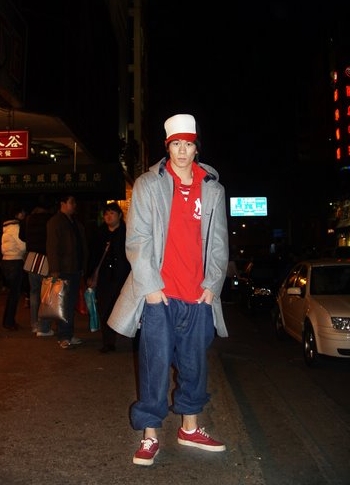
Plenty of young Beijingers do the hip hop thing but fail to individualize it. Here, Mr. Shen has given this imported fashion his own smart flair. Beijing has countless, very scrawny, young rich kids who wear baggy jeans below their hips and walk around with huge headphones. These hip hop enthusiasts tend to be so swathed in loads of fabric that one cannot really notice their face or anything else – talk about the clothes wearing the man. This is clearly not the case with Mr. Shen. Describing his style, Mr. Shen shrugged and said “hip hop” and he also said that I probably wouldn’t have heard of the groups he likes. Stylites will be featuring much more on local hip hop culture and style in the very near future – this will include the best stores and analysis of what it means for a Chinese person to live the hip hop lifestyle.

In China, hip hop ranks as an aspirational lifestyle, rather than as a response to some grim reality.

Black Tie, Yellow Coat at Xidan

dsc02198-tc

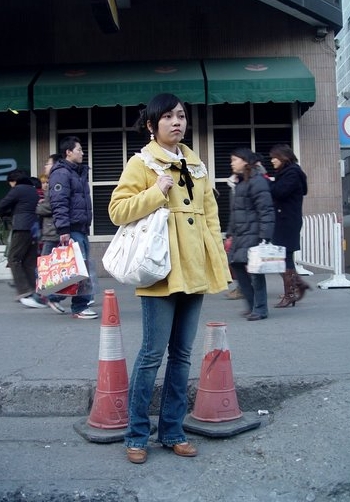
The river of long black puffer coats was forded with this high-waisted yellow wool number, charming with the little tie and lace that maximizes the cuteness of the wearer. With so much horrible lace in Beijing, it’s nice to see an example that is appealing. She said she looks bad in photos, and didn’t want to look into the camera. I think she looks quite alright though.

Francophilic Butterfly Enthusiast

francophile

Ma Jing shops at whatever stores are on the way between her home and the Alliance Francaise where she takes classes every day in preparation for study in Paris next year. She has loved France for many years and is excited to finally be going. The most important element of style, according to Ms. Ma, is finding clothing that is appropriate for the wearer – clothing that brings out their best.

Working Chap at Xidan

pretty-boy

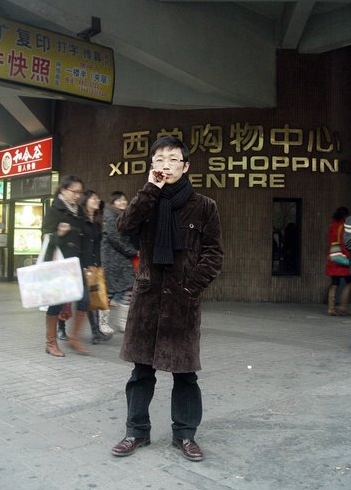
Drowsily pimping with fur and chains, Mr. Tian asked permission not to disclose his profession. Possessing a certain louche appeal, he had a manner and a delicate voice. Oddly, he joined several other Xidan pedestrians in describing the USA as the most stylish country. They didn’t know that I am American when answering the question – no one ever guesses it anyway.

I’m flattered and some parts of Manhattan support the claim. Still, this perspective can only be attributed to the availability of American movies through fake DVDs. Generally, the older or more educated a person seems, the less likely they are to call America the most stylish country, tending to make the more predictable choice, France. Among younger stylish people, other frequent choices are Korea and Japan. In fact, I would have to say that at this moment in time US pop culture is competing neck to neck with Korean pop culture, perhaps even more than Japanese.

Interview on CScout China Blog

CScout charts new and innovative trends in hotspots throughout the world. With offices in Tokyo, Munich, New York, and Beijing, their blogs regularly feature updates on consumer-oriented trends in lifestyle, marketing, and technology. This week, Daniel Allen, their Beijing Trend Director interviewed me on trends and drivers in the China fashion market.