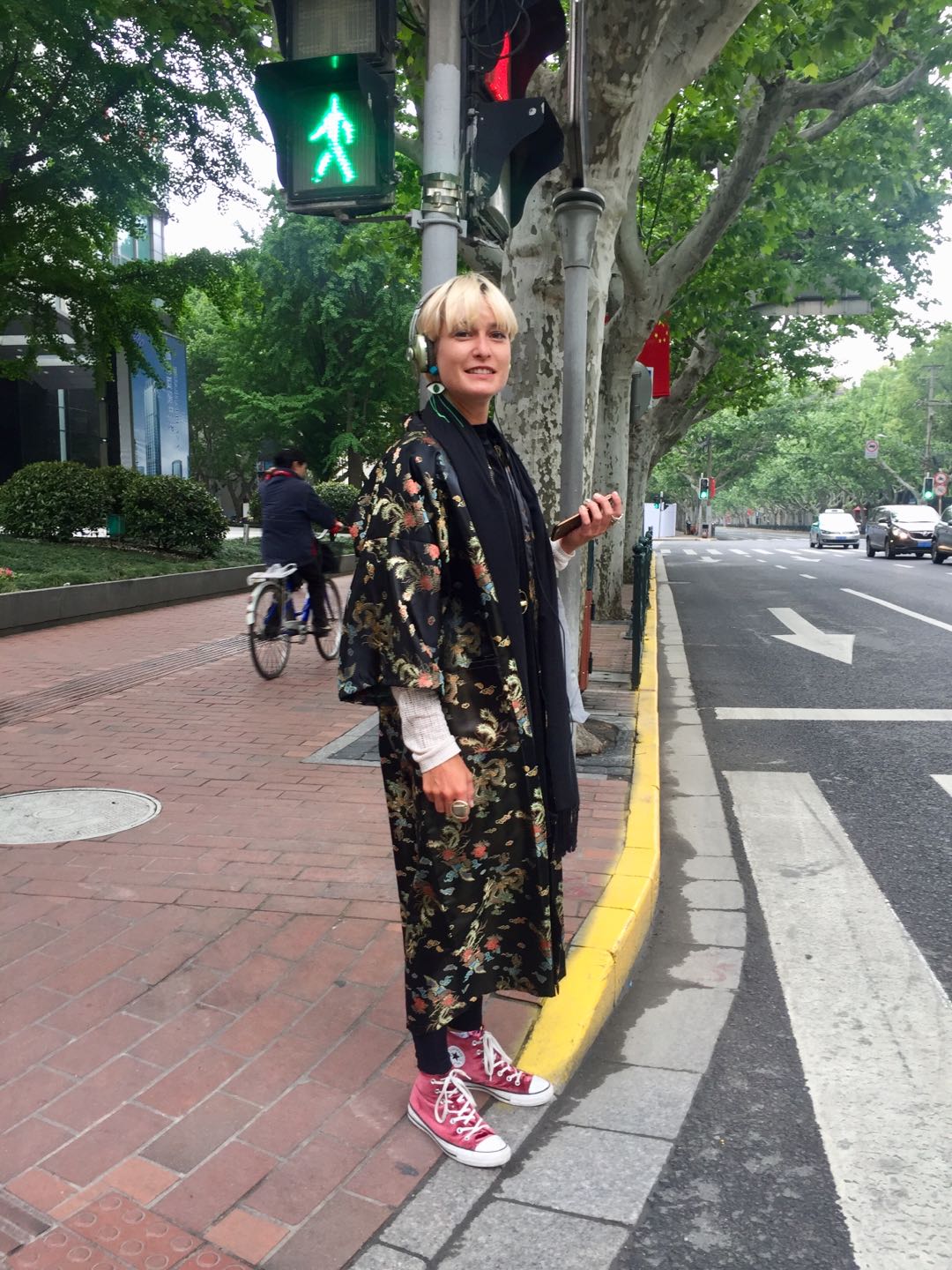
I will be heading there on Thursday. Taking street style photos will not be a priority since Beijing is the overwhelming focus of my site. Droves of bloggers of my type will be there anyway. I will, however, work to report on the role of Beijingers at this event.
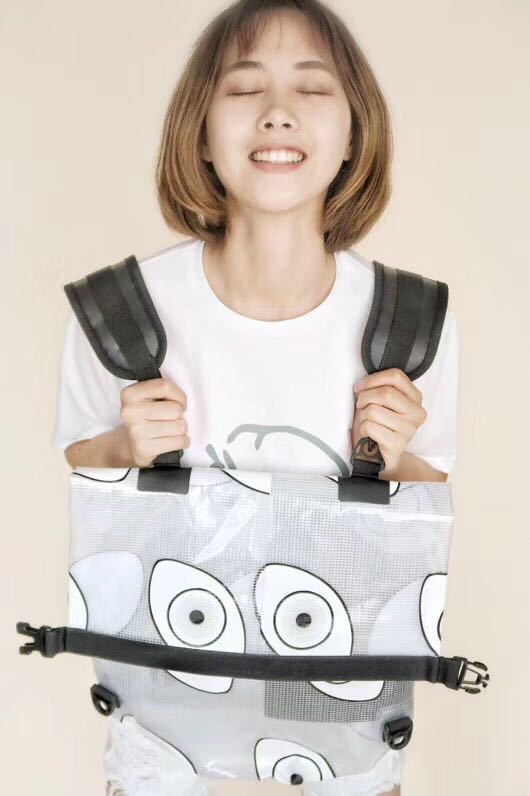
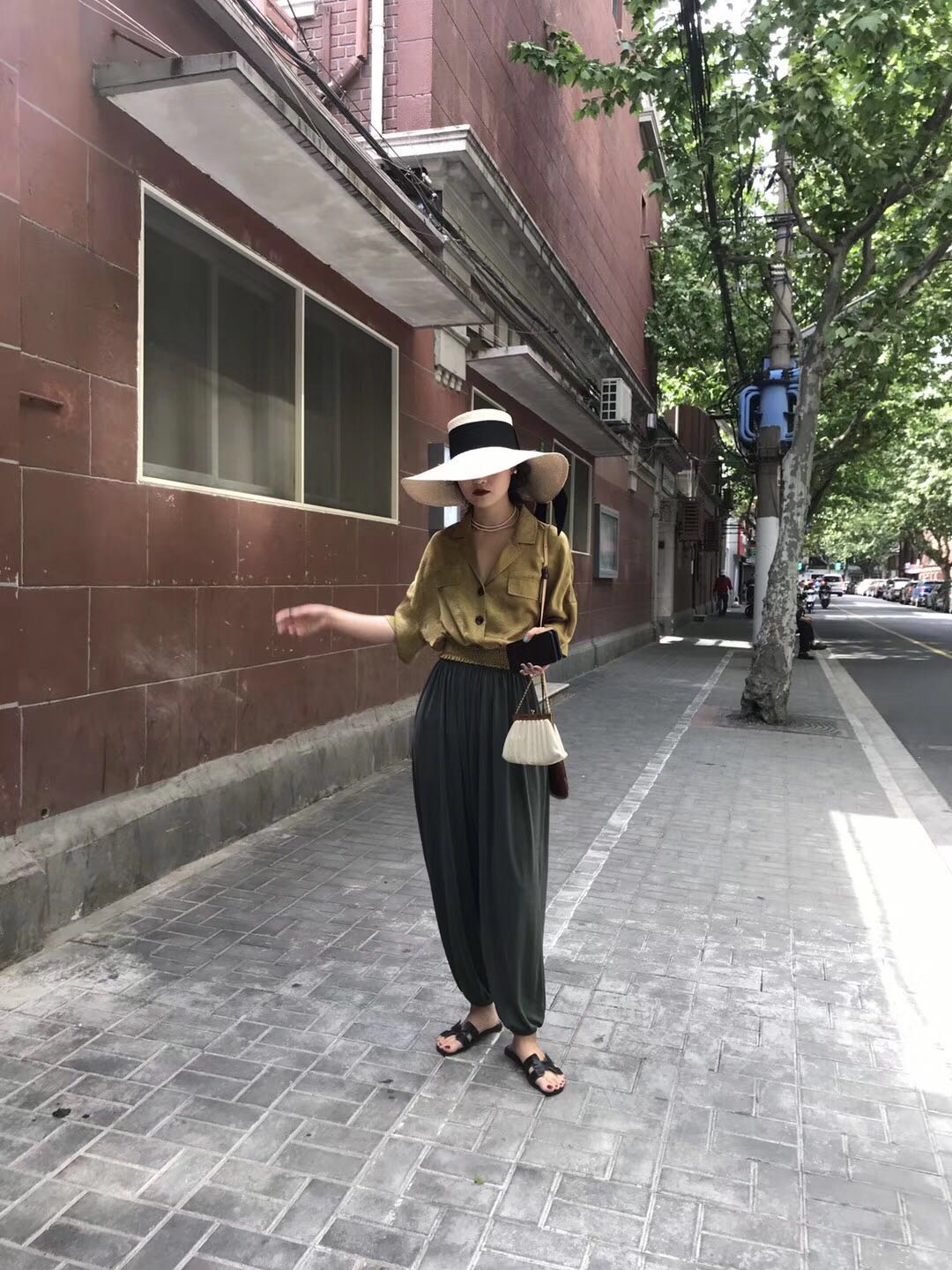
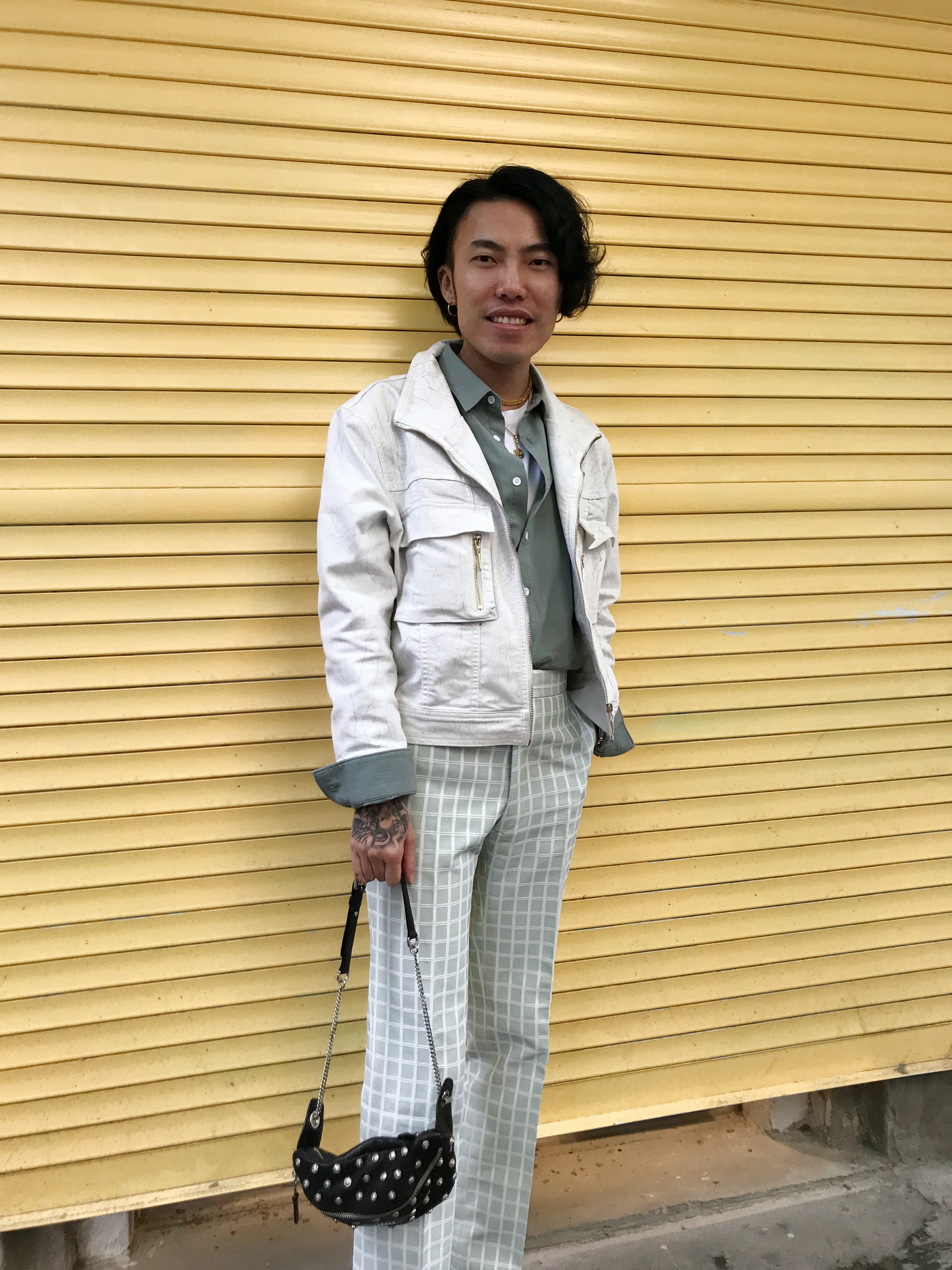
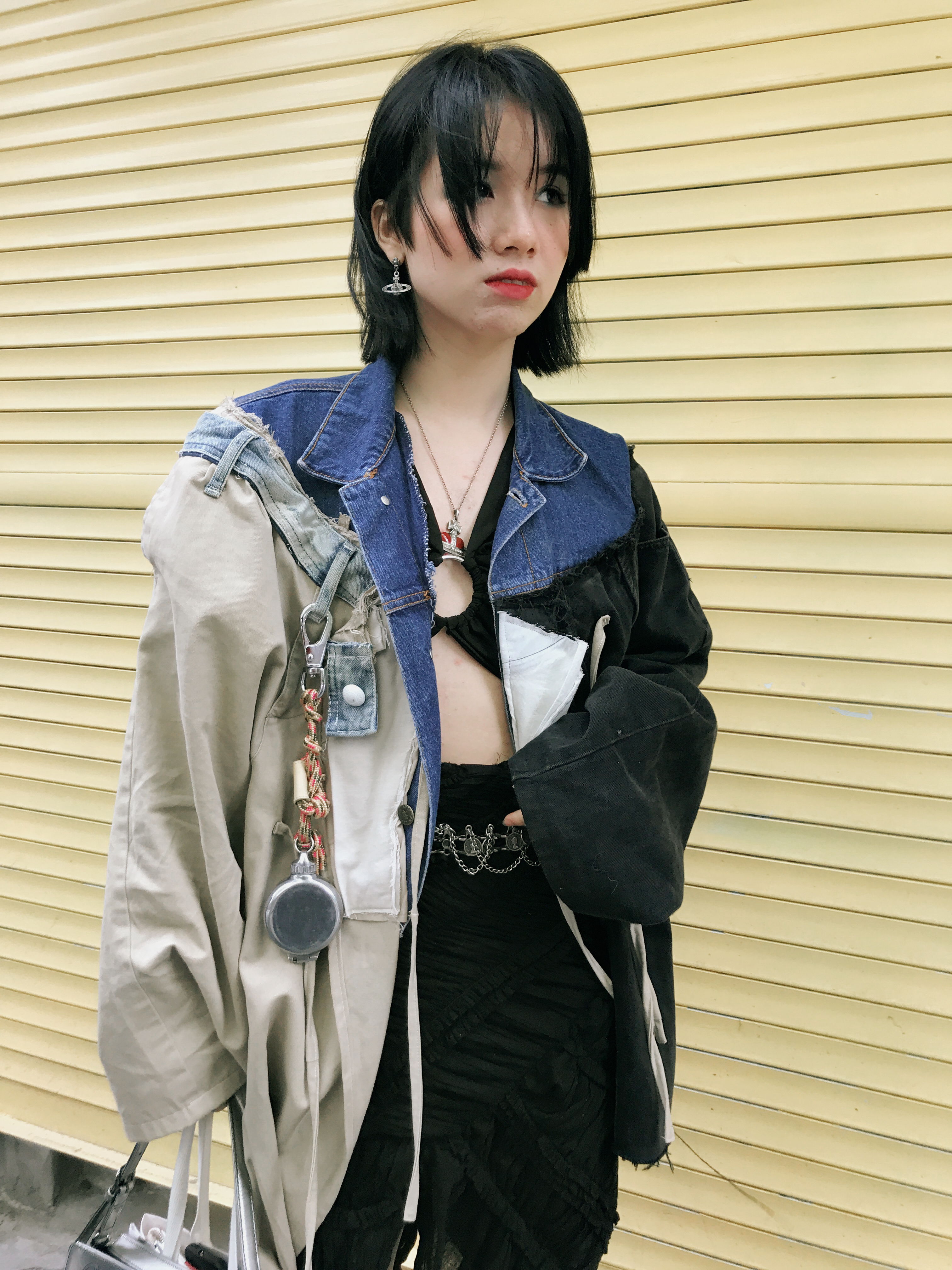
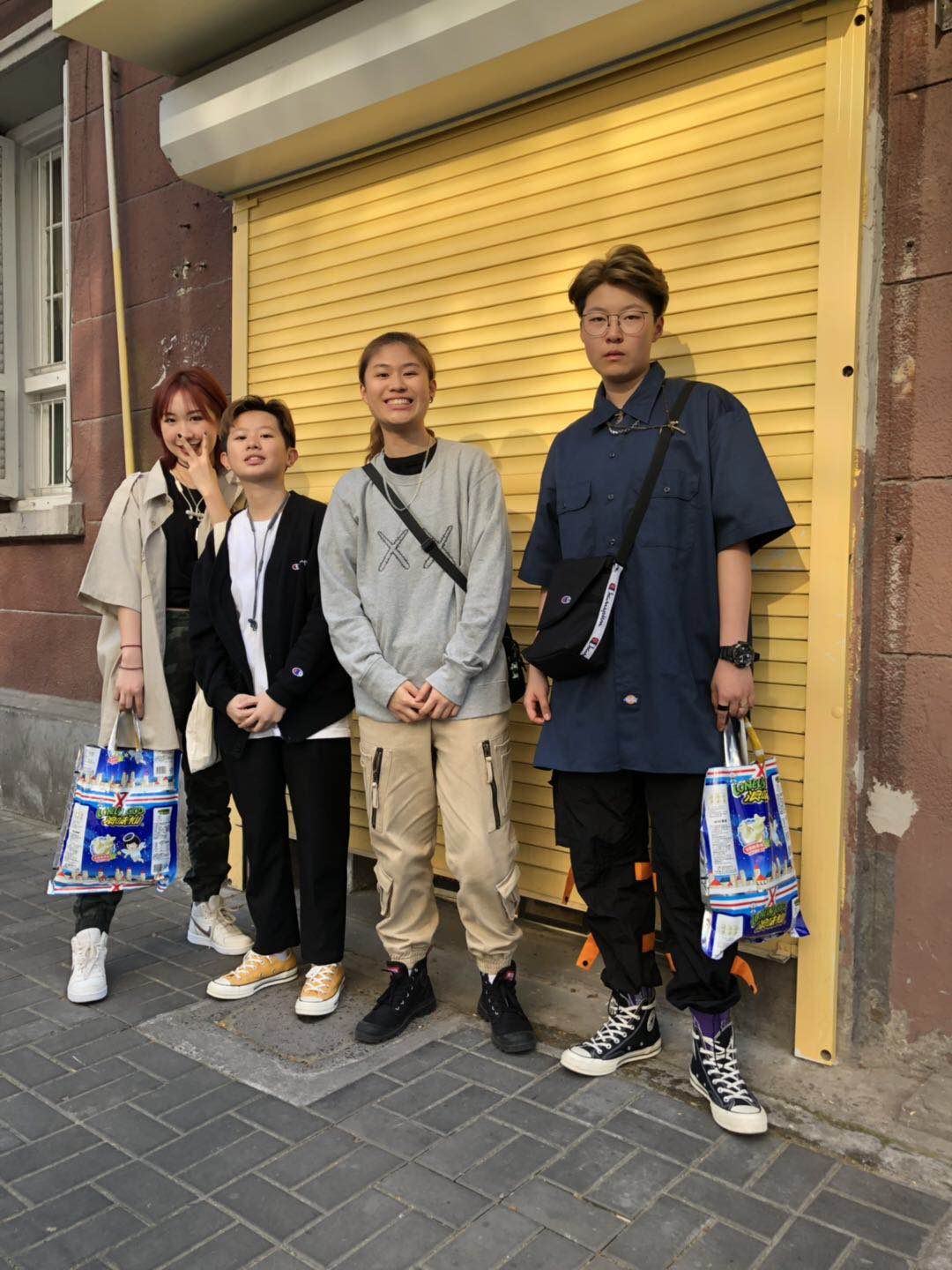
I have a whole set of rules that make it easier for me to know what not to photograph. Most people can be crossed-off without further thought because they have committed some kind of unpardonable offense. Beyond the obvious sins like large logos and monogram handbags, Ugg boots – generally fake in Beijing – and puffy coats generally guarantee exclusion from these rarefied parts. Still, these two students from the Northeast had cuteness, which tends to get you somewhere in life.
Inspired by nonconformist fops of London’s Kingsland Road, father-son team Casely-Hayford present a louche by fanciful SS 2010 collection, called ”Kings of the Kings Land”, that combines Savile Row tailoring, Turkish handwork, and Afropunk attitude for a result that is ineffably English.
“Smoking Kills” signs strike me as puritanical, tasteless, and far from solution-oriented. The Caroloto is an interesting substitute for cigarettes by Chinese designer Zheng Daizi. While it may not be the final answer, any substitute that recognizes man’s need to hold objects in the hand and place them in his mouth is welcome.
I am so anxious for it to end. Winter is my favorite time. In fact, I would choose year-round winter if it meant odious summer would cease to exist. Beijingers, however, are more opposed to the cold than I am. Being unstylish is excusable in such supposedly savage weather and wearing a overstuffed, synthetic coat is seen as justified given the supposedly extreme cold. I was always under the impression that winter was a very stylish time. One can wear all sorts of different scarves, elegant cinched-waist wool coats, and dramatic boots. Heat is more the enemy of style since it reduces the amount that can be worn. I suspect that wool coats are perceived as being a bit oldmanish – or they are too expensive.
Of course, it is usually the heavy hat plus coat combo that keeps me warm. As has been noted by many observers, hats are barely worn at all here, even on the coldest days. Chinese tradition places more importance on the legs and feet; the head is virtually irrelevant.
Following are some of the latest that I am hoping will make their way into my home and wardrobe. 这些是我最近比较想要的新东西:
Made in Scotland on a Jacquard loom and finished by hand, this 100% cashmere blanket adorned with images from Damien Hirst’s New Religion series will be more heart (and body) warming than sharks in formaldehyde or jewel-encrusted skulls. It is big enough to fit a double bed and should encourage more production of new life than ruminations on the end.
The Victor Boa from Mr. Hare bring tassel loafers seem suitable for all ages in 2010.
Hermès is one of the few luxury brands one thinks of as being relatively China-free. Those complex and delicate prints actually come from a factory in France. Buying into the legacy really means something in the case of Hermès. That is why the following article suggesting that they are about to start a brand designed and made in China seems surprising and meaningful. If this is true, the boldness and honesty of the gesture stands in contrast to the somewhat underhanded way in which other brands produce their stuff here and then slap on the “made in Italy” label. I wonder if there is any more information.
I wonder how many red-haired artists China has. Maybe it is more common than I think. At the very least, there is a writer, also from Taiwan, who had red hair. Victoria (Yung-Chih) Lu was born in Taipei and studied painting at age six. At nine, she enrolled in night classes at University and was described by newspapers as the “youngest college student”. At 19, she went to study in Belgium and in ‘73 she went to the United States where she became involved in the Women’s Liberation Movement. Concurrently, she moved away from traditional painting and became a more radical figure in the art world. This month, she had a show at the Today Art Museum in Beijing.
Want to meet the quirkiest Beijingers? Looking for an inroad into China’s publishing world?
Internships are now available at both Stylites (Beijing) and LifeStyle Magazine (Beijing and Shanghai). Contact me for more details (nels (at) stylites (dot) net).
Please note that internships are generally unpaid.
These two, from Xinjiang, are students at the Central Academy of Drama. They also play in rock bands in old country. The ideal, these two say, is to be in movies abroad. Apparently there are about ten or so Uighurs studying at the school.
Photographed at Lan Club, Beijinger Liz does PR in a multi-brand luxury retailer. She prefers to mix and match rather than wear only items from upscale labels.
The shades lighter than navy should appear more, especially in coats. It brightens the mood in a winter landscape, too often dominated by black and gray, especially in horrible puffer coats.
Blue coats always make me think of Julien Sorel, the protagonist in the Red and the Black. He was given one by his patron, the marquis, and this enabled him to feel on a level with the aristocrats whom he was attempting to impress. Of course, I would think that the coat in that case was a dress garment and not an outdoor coat.
Milk@Coffee lead singer Kiki, last mentioned here for designing a dress, is very accomplished. She has come out with several albums and now even a book about herself. Her style of music is rather cheerful and poppy, but seems to deal with the subjects of loneliness and being by herself – one of her biggest hits is called “Accustomed to Loneliness”. Something about her that doesn’t meet the eye must be repelling everyone.
Armani continues its reign at the top of the Hurun list of brands favored by China’s richest, while Hermès and Gucci are rated star players over the past year. Jingdaily.com gives its analysis of the results. Apparently, the rich are becoming more discerning and worldly. Hermès being the top luxury accessories brand instead of LV seems to back this up. This piece from Luxurysociety.com, compared to their Japanese counterparts suggests that the cult of LV bags will never take old here in China the way it did in Japan. Chinese luxury consumers are apparently individualists. Some surprise showings on the Hurun list are Air China as the favored first and business class airline and Shangri-La as the best luxury hotel brand. This seems like a bit of nationalism (Shangri-La is not a mainland company but was started by overseas Chinese, I believe).
Hangzhou fashion brand JNBY, short for “just naturally be yourself”, opens its first US boutique in Soho, NYC, after hosting a successful pop-up shop nearby.
This entire site ⓒ 2007-2009 Styites in Beijing. All of the photographs herein, unless otherwise noted, are copyrighted by the photographer, Mr. Nels Frye. No part of this site, or any of the content contained herein, may be used or reproduced in any manner whatsoever without express permission of the copyright holder.